
Trenches Cut to Depth for Permanent Infrastructure
Utility Trenching Services in Nampa for new construction and infrastructure upgrades requiring underground water, sewer, and electrical line installation
Installing water lines, sewer pipes, electrical conduit, and fiber optic cables requires trenches cut to specific depths and widths that protect utilities from frost, vehicle loads, and future excavation damage. The work exposes existing underground infrastructure that must be avoided, identifies soil conditions that affect pipe bedding and backfill, and creates stable trenches that allow safe access for pipe installation. Montclair Excavation and Services cuts trenches following engineered alignment and depth specifications that utility providers and building codes require.
Trenching depth varies by utility type—water lines must sit below frost penetration depth to prevent freezing, while electrical conduit depth depends on voltage and whether the line runs under pavement or landscaping. Trench width must accommodate the pipe diameter plus required clearance for backfill compaction on both sides. Before digging begins, all existing utilities are located and marked to prevent accidental damage that disrupts service and creates safety hazards.
Schedule a property evaluation to identify existing utilities and soil conditions along proposed trench routes.
Why Trench Depth and Bedding Matter Long-Term
Utility trenching begins with surface marking of the route, followed by excavation to the depth specified by engineering plans or utility standards. Operators maintain consistent trench depth and width while watching for changes in soil type that affect sidewall stability and pipe support. Rocky soil may require breaking or removal to achieve smooth trench bottoms, while sandy deposits need sloped sidewalls to prevent collapse during pipe installation.
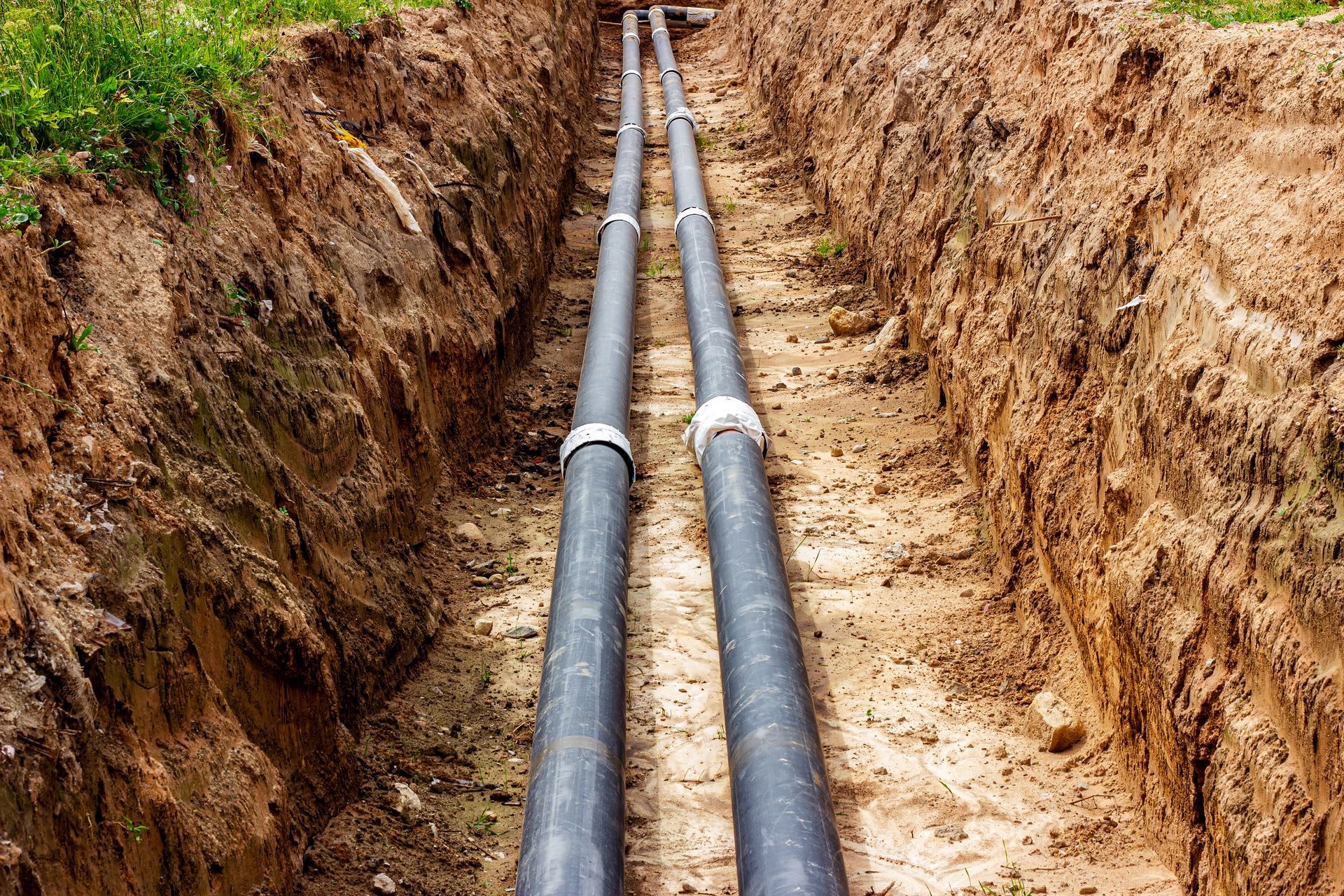
After trenching is complete, you see a continuous excavation running from the connection point to the utility source, cut to uniform depth with stable sidewalls and a level bottom. Water line trenches in Nampa typically reach depths of four to five feet to sit below the local frost line, while sewer trenches follow slopes calculated to maintain gravity flow. Electrical and fiber trenches may run shallower but require warning tape placed above conduits to alert future excavators.
Trench backfill happens in stages—initial bedding material surrounds the pipe to provide uniform support, then structural fill is compacted in layers to prevent settling under driveways or foundations. The top layer matches existing soil or base material for pavement restoration. Improper backfill compaction creates voids that collapse over time, causing surface depressions and potentially damaging the utility.
What Property Owners Usually Ask
Questions about utility trenching often focus on depth requirements, existing utility conflicts, and how to prevent damage to pipes after installation is complete.
What determines the minimum depth for water line trenches?
Frost penetration depth in Nampa requires water lines to be buried at least four feet deep to prevent freezing during winter cold snaps. Lines running under driveways or roads need additional cover to handle vehicle loads without pipe damage.
How do trenching crews avoid hitting existing underground utilities?
Before excavation begins, utility locating services mark the approximate position of existing lines using surface paint or flags. Operators then expose those utilities carefully using vacuum excavation or hand digging before machine trenching continues in clear areas.
Why do some trenches require wider excavation than the pipe diameter?
Pipes need clearance on both sides for proper backfill placement and compaction. Trench width typically equals pipe diameter plus 12 to 16 inches to allow workers to compact material around the pipe without creating voids or uneven support.
What soil conditions make trenching more difficult or expensive?
Solid rock, hardpan layers, and high groundwater all slow trenching progress. Rock may require hammers or breaking equipment, while groundwater needs pumping to keep trenches dry enough for pipe installation and inspection.
How is trench backfill different from regular soil?
Structural backfill uses clean, granular material that compacts to high density without settling. Native soil containing clay, organics, or large rocks doesn't compact reliably and can shift over time, creating surface depressions or putting stress on buried pipes.
Montclair Excavation and Services coordinates trenching schedules with utility contractors and inspectors to maintain project timelines and ensure proper installation sequencing. Arrange an on-site consultation to review trench routing options that minimize conflicts with existing site features and underground infrastructure.