
Building Pads Prepared to Specification Before Concrete
Foundation Excavation & Building Site Preparation in Nampa for residential and commercial construction requiring accurate footing depths and compacted base surfaces
Foundation performance depends entirely on the excavated surface that supports it—uneven bearing surfaces cause differential settling, while incorrect depths place footings above frost lines or in unsuitable soil layers. Properties in Nampa with expansive clay soils or variable subsurface conditions require excavation that reaches stable bearing strata and creates level surfaces for formwork placement. Once the work is finished, concrete contractors can set forms to exact elevations without shimming or adjusting for grade errors. Montclair Excavation and Services cuts foundation excavations and builds building pads following structural plans that specify bearing elevation, footing width, and slab preparation requirements.
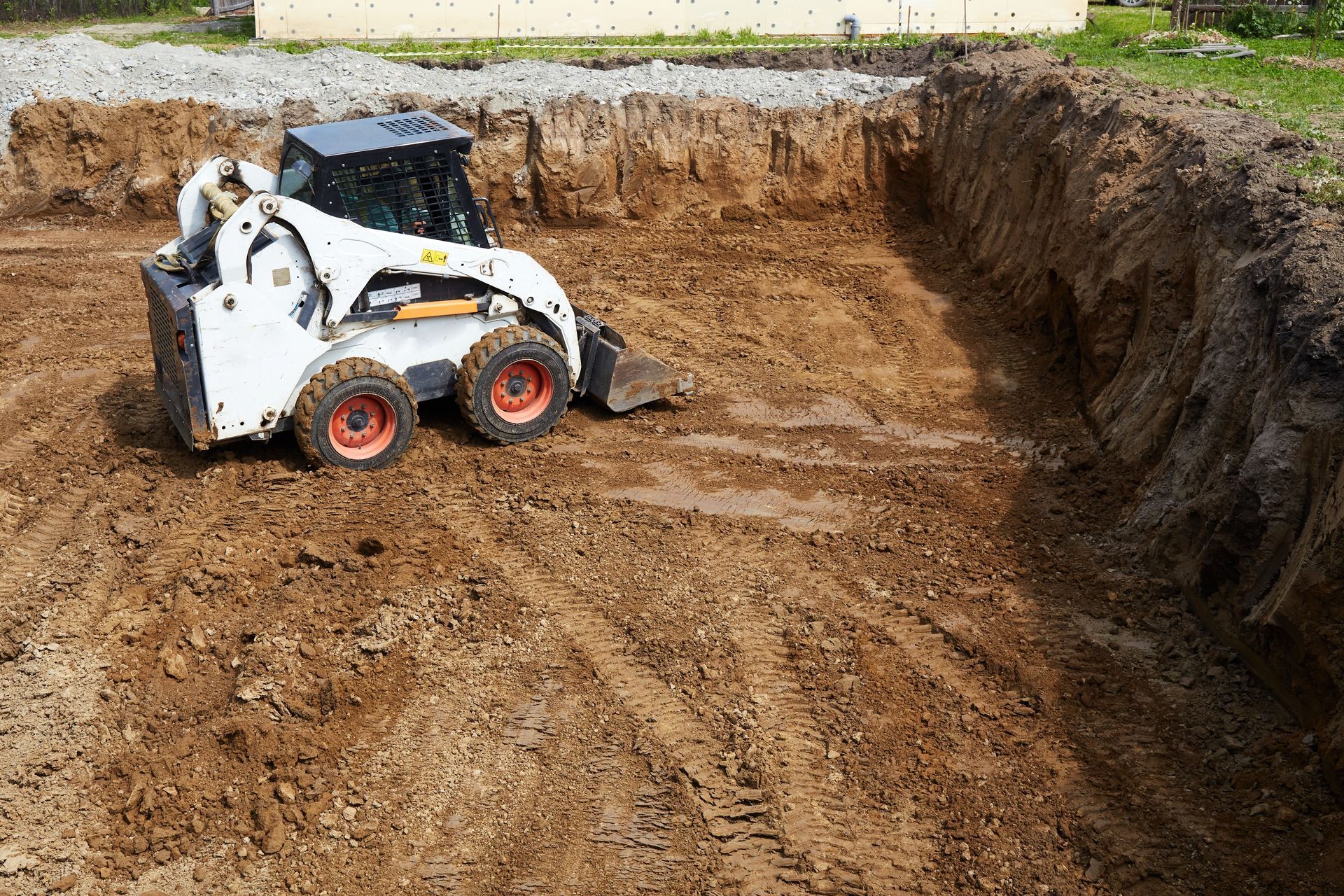
Site preparation begins by stripping topsoil and organic material that compresses under structural loads, then excavating to the bearing elevation engineers specify. Building pad construction may involve removing several feet of unsuitable fill and replacing it with compacted structural material that supports foundation loads without settling. Excavated surfaces are checked continuously against grade stakes and laser levels to maintain accuracy within inches of design elevation.
Request a planning session to review foundation design requirements and how existing site conditions affect excavation approach.
What Proper Site Preparation Requires
Foundation excavation removes soil to depths calculated based on frost penetration, bearing capacity, and structural loading. Footing trenches are cut wider than the footing itself to allow form placement and concrete consolidation. Slab preparation involves excavating to subgrade elevation, then placing and compacting base material that provides uniform support and prevents moisture wicking into concrete. Each step must meet tolerances that structural drawings specify—footings cut too shallow sit above frost depth, while uneven subgrade creates slab thickness variations that affect strength.
When excavation and site preparation are complete, you see footing trenches cut to consistent depth with level bottoms and vertical sidewalls in stable soil. Building pads appear flat and solid underfoot, compacted to density that prevents rutting under equipment traffic. Slab subgrade sits at uniform elevation across the entire footprint, ready for vapor barrier and concrete placement without additional leveling.
Construction-ready grading establishes final site elevations around the building pad, creating positive drainage away from foundation walls and directing runoff to swales or storm systems. The transition between building pad and surrounding grade must prevent water from flowing toward the structure while maintaining slopes gentle enough for safe access and landscaping.
Questions Before Starting Your Project
Contractors and property owners preparing for new construction frequently ask about excavation accuracy, soil suitability, and how weather affects foundation work timing.
What elevation accuracy do foundation excavations require?
Footing excavations typically need to be within two inches of specified depth to maintain proper frost protection and bearing surface elevation. Slab subgrade requires even tighter tolerance—within one inch—because variations affect concrete thickness and floor levelness.
How do excavators verify they've reached suitable bearing soil?
Structural plans specify the soil type and bearing capacity required to support foundation loads. Excavators dig until they expose soil matching that description, then engineers or inspectors verify suitability through visual inspection or testing before concrete placement proceeds.
Why do some building pads require imported fill material?
When native soil consists of expansive clay, organic material, or loose sand, it must be removed and replaced with engineered fill that compacts to specified density. The replacement material provides predictable bearing capacity and prevents differential settlement as the building loads the foundation.
What happens if excavation reveals groundwater above footing depth?
High groundwater requires either lowering the water table using permanent drainage systems or redesigning the foundation to include waterproofing and structural modifications. Excavation contractors install dewatering pumps temporarily to allow inspection and construction in dry conditions.
How does seasonal timing affect foundation excavation in Nampa?
Wet soil doesn't compact properly and creates muddy conditions that prevent accurate grade work. Fall excavation allows sites to stabilize over winter, while spring work must account for saturated soil conditions that slow equipment operation and affect compaction quality.
Site-specific soil conditions, existing grade, and structural requirements all affect excavation methods and material handling. Montclair Excavation and Services works directly from structural plans to prepare building sites that meet engineering specifications and inspection requirements for foundation placement.